Install Findmino as an app for the best experience!
Commercial Airline Pilot
(Airline Captain, First Officer, Co-Pilot, ATPL Pilot)
Transport & Logistics
Salary
€45,000 - €180,000/yr
Level
Senior
Outlook
Growing
Sector
Transport & Logistics
What does a Commercial Airline Pilot do?
As a Commercial Airline Pilot you control and navigate fixed-wing aircraft, transporting passengers, mail, and freight safely to their destinations. You operate and monitor the mechanical, electrical, and avionics systems of the aircraft throughout every phase of flight, from pre-flight checks on the ground to landing and shutdown. You work closely with a co-pilot, cabin crew, air traffic controllers, and ground operations staff to ensure every flight departs and arrives safely and on schedule. You are responsible for making critical decisions during normal and emergency situations, following civil aviation regulations and standard operating procedures at all times.
A Day in the Life
Listen: a day as a Commercial Airline Pilot
Your alarm goes off at 04:15. You are based at Dublin Airport and your report time is 05:30 for a 07:00 departure to Heathrow. You drive to the crew report centre, swipe in, and collect your briefing pack. You check the NOTAM system — Notices to Air Missions — for any temporary airspace restrictions, then review the weather reports for Dublin, Heathrow, and your alternate airport, Birmingham. Fuel load, wind patterns at cruise altitude, and the SIGMET for moderate turbulence over the Irish Sea all need your attention before you sign anything. You meet your First Officer in the briefing room. You are the Captain today, so the final authority on the flight rests with you. Together you walk through the flight plan, agree on the fuel figure with the dispatcher, and head out to the aircraft — an Airbus A320. The external walk-around takes about fifteen minutes: tyres, control surfaces, engine inlets, landing lights. Everything is logged.
Videos about Commercial Airline Pilot
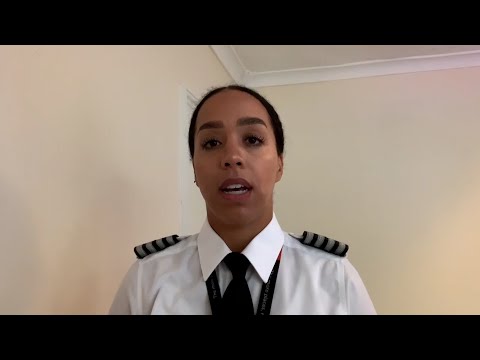
Career advice on becoming an airline pilot
icould career stories
Some videos were filmed in the UK. The work itself is the same, but the exams, qualifications and pay they mention are British — we include them so you get a feel for the job.
Required Education
Leaving Certificate subjects such as Maths, Physics, and English are strongly recommended, as these underpin the technical and communicative demands of pilot training. The primary route to becoming a Commercial Airline Pilot in Ireland is completing an Integrated ATPL (Airline Transport Pilot Licence) programme at an approved flight training organisation, such as Atlantic Flight Training Academy in Cork, which is an NFQ Level 7-equivalent professional qualification. This typically takes around 18 months to two years and culminates in ATPL frozen status, which is then converted to a full ATPL once you accumulate the required flying hours. All licences are issued and regulated by the Irish Aviation Authority (IAA), which oversees compliance with European Union Aviation Safety Agency (EASA) standards. Some pilots enter through a modular route, building licences and ratings incrementally, which can be more affordable but takes longer. Airlines such as Aer Lingus and Ryanair also run cadet programmes that combine flight training with a pathway to a type-rating and a first officer role.
Required Skills
Career Perspective
Most pilots begin their career as a First Officer (co-pilot) with a regional or low-cost carrier, accumulating flying hours and building experience across different route networks. After several years and once the required hours are met, pilots can progress to Senior First Officer and eventually to Captain, taking command of the aircraft and full responsibility for the flight. In Ireland, carriers such as Ryanair, Aer Lingus, and ASL Airlines offer structured progression pathways, and experienced captains may move into training captain or check captain roles, assessing and mentoring junior pilots. Some pilots pursue management positions in flight operations, safety, or regulatory affairs with airlines or the IAA.
AI Impact on the job
AI and advanced automation are already present in modern cockpits through sophisticated autopilot systems, flight management computers, and predictive maintenance tools, but these augment rather than replace the pilot's role. AI-powered decision-support tools are being developed to assist with weather routing, fuel optimisation, and anomaly detection, reducing pilot workload on routine tasks. Regulatory frameworks from EASA currently require a qualified pilot in command for commercial passenger flights, and the certification of fully autonomous commercial aircraft remains a long-term prospect rather than an imminent reality. Pilots who embrace data literacy and adapt to increasingly automated cockpit environments will remain highly valued throughout their careers.
Career Ladder
→ Commercial Airline Pilot (Current role)
Related Studies
Employers in Ireland
Organisations in Ireland that employ people in this occupation.
Dublin Airport, Co. Dublin
Europe's largest low-cost carrier operating extensive short-haul fleet
Dublin Airport, Co. Dublin
National carrier flying short and transatlantic long-haul routes
Dublin Airport, Co. Dublin
Regional airline operating wet-lease and scheduled European routes
Dublin Airport, Co. Dublin
Cargo and charter airline flying freighter and passenger contract operations
Dublin Airport, Co. Dublin
Regional turboprop operations connecting Irish and UK regional airports
Casement Aerodrome, Baldonnel, Co. Dublin
Military pilots supporting state transport, humanitarian and patrol missions
Casement Aerodrome, Baldonnel, Co. Dublin
Pilots flying ministerial and state VIP transport aircraft
Dublin Airport, Co. Dublin
Airport operator supporting pilot operations and aviation career pathways
Ireland West Airport, Knock, Co. Mayo
Charter and air ambulance pilots operating fixed-wing regional services
Dublin Airport, Co. Dublin
Business aviation pilots operating executive and charter fixed-wing aircraft
Dublin, Co. Dublin
Supports type rating and simulator training for commercial airline pilots
We don't know whether these employers currently have vacancies — always check their own website. And if there's somewhere you'd really love to work, it can be worth applying anyway, even without an open vacancy.
Our tools can help you with that:
This website uses cookies
We use functional cookies and — with your consent — cookies for preferences, statistics and marketing.