Install Findmino as an app for the best experience!
Embalmer
(Funeral Embalmer, Mortuary Technician, Funeral Preparation Specialist, Restorative Artist)
Health & Social Care
Salary
€28,000 - €48,000/yr
Level
Professional
Outlook
Stable
Sector
Health & Social Care
What does an Embalmer do?
As an embalmer, you prepare the bodies of deceased persons for burial or cremation, working closely within a funeral home environment. Your daily work involves the removal of remains from the place of death, cleaning and disinfecting bodies, and applying specialist embalming techniques to preserve and restore a natural appearance. You use cosmetics, restorative art skills, and professional dressing procedures to ensure the deceased looks their best for family viewings. You collaborate closely with funeral directors to honour the specific wishes of grieving families, and you maintain accurate records and inventories of equipment and chemicals used. Attention to hygiene, health and safety regulations, and compassionate professionalism are central to every aspect of the role.
A Day in the Life
Listen: a day as an Embalmer
Your alarm goes off at 7:15 a.m. You are a qualified embalmer working for a busy funeral home in a large Irish town. Before leaving the house, you check your phone — a death notification came through overnight from a local nursing home. You ring the funeral director on call to confirm arrangements and head straight to the home to assist with the removal of remains. You wear full personal protective equipment: gloves, apron, mask and face shield. Transferring the deceased with dignity and care onto the stretcher, you speak quietly with the nursing staff to gather details about the person's medical history, which will affect how you approach the embalming later. Back at the funeral home by 9:00 a.m., you complete the initial identification paperwork, checking the death certificate and coroner's documentation. The preparation room is clean and temperature-controlled. You carry out a full external assessment of the body before beginning arterial embalming, injecting a formaldehyde-based preservative solution through the carotid artery while draining blood via the jugular vein. The process takes roughly two hours, and you monitor the distribution of fluid carefully throughout.
Videos about Embalmer
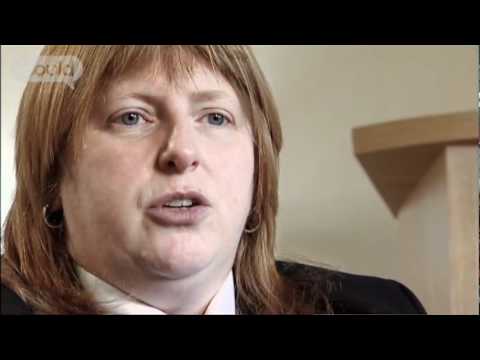
Career Advice on becoming an Embalmer by Dianne C (Full Version)
icould career stories
Some videos were filmed in the UK. The work itself is the same, but the exams, qualifications and pay they mention are British — we include them so you get a feel for the job.
Required Education
There is no single mandatory Leaving Certificate subject requirement, though Biology, Chemistry, and Home Economics are beneficial in preparing you for the scientific and practical aspects of the work. The Irish Institute of Funeral Directors (IIFD) provides the recognised training pathway in Ireland, offering a professional diploma that combines theoretical study with supervised practical experience in a funeral home setting. This qualification typically aligns with NFQ Level 6 and is the standard route into the profession. Many entrants begin working as funeral home assistants or mortuary attendants to gain on-the-job experience before completing formal embalming training. QQI Level 5 courses in subjects such as Health Science or Anatomy and Physiology can also provide a useful foundation prior to specialist study.
Required Skills
Career Perspective
Most embalmers in Ireland begin as funeral home assistants or mortuary attendants, gaining practical experience before undertaking the IIFD professional diploma in embalming. Once qualified, you typically work as a staff embalmer within an established funeral home, building expertise across a range of cases and cultural requirements. With experience, you may progress to a senior or lead embalmer role, taking responsibility for training junior staff and overseeing preparation standards across the business. Some experienced embalmers go on to become funeral directors or establish their own funeral home operations.
AI Impact on the job
AI has a limited direct impact on the core practical tasks of embalming, as the work is inherently hands-on and requires physical presence and human sensitivity that cannot be replicated by technology. Administrative aspects of the role, such as record keeping, scheduling, and inventory management, may be assisted by digital tools and software, reducing paperwork burdens. AI-driven advances in cosmetic and restorative products may offer embalmers improved materials to work with over time. Overall, the profession remains highly dependent on skilled human practitioners and is not significantly threatened by automation.
Career Ladder
→ Embalmer (Current role)
Employers in Ireland
Organisations in Ireland that employ people in this occupation.
Dublin City
Long-established Dublin funeral home employing embalmers for preparation services.
Dublin City and surrounding areas
Major Dublin funeral group requiring embalmers for body preparation and viewings.
Dublin North
Family funeral home employing embalmers for deceased preparation and restorative work.
Nationwide
Regional funeral director network utilising embalmers for professional body preparation.
Cork City
Established Cork funeral home employing embalmers for preparation and family viewings.
Limerick City
Midwestern funeral firm requiring embalming expertise for deceased care services.
Nationwide
Public health service employing mortuary and embalming staff in hospital settings.
Wexford Town
Southeast funeral home employing embalmers for body care and restorative preparation.
Galway City
Connacht funeral director employing embalmers for dignified deceased preparation services.
Athlone, Co. Westmeath
Midlands funeral home requiring embalming professionals for preservation and viewing preparation.
We don't know whether these employers currently have vacancies — always check their own website. And if there's somewhere you'd really love to work, it can be worth applying anyway, even without an open vacancy.
Our tools can help you with that:
This website uses cookies
We use functional cookies and — with your consent — cookies for preferences, statistics and marketing.