Install Findmino as an app for the best experience!
Fisheries Officer
(Fisheries Inspector, Aquatic Environment Officer, Sea-Fisheries Control Officer, Inland Fisheries Warden)
Agriculture & Environment
Salary
€32,000 - €65,000/yr
Level
Professional
Outlook
Stable
Sector
Agriculture & Environment
What does a Fisheries Officer do?
As a Fisheries Officer you protect and manage Ireland's rivers, lakes, and coastal waters, ensuring that fish populations and aquatic habitats remain healthy for future generations. Your working day can involve patrolling waterways by boat or on foot, checking fishing licences and permits, investigating illegal fishing or pollution incidents, and collecting environmental data. You work closely with Inland Fisheries Ireland (IFI), the Sea-Fisheries Protection Authority (SFPA), government bodies, anglers, and local communities to promote sustainable fishing practices. Habitat improvement projects, fish stock surveys, and public education also form a significant part of the role.
A Day in the Life
Listen: a day as a Fisheries Officer
Your alarm goes off at 6:45 a.m. on a Tuesday in late October. You are a Fisheries Officer with Inland Fisheries Ireland, based out of a regional office in Carrick-on-Shannon. You pull on your IFI-branded waterproof jacket and steel-toe boots before checking the day's schedule on your work tablet. There are two licence inspections planned along the River Shannon, a report of a suspected pollution incident near a tributary outside Roscommon town, and paperwork from yesterday's electrofishing survey to finish. By 8:15 a.m. you are at the office, logging your patrol vehicle out and loading sampling equipment — dip nets, water-quality test kits, and a handheld GPS unit. Your colleague briefs you on the pollution tip-off: a farmer reportedly discharged silage effluent into a small stream overnight. You radio ahead to confirm the local authority environmental inspector will meet you on site.
Videos about Fisheries Officer
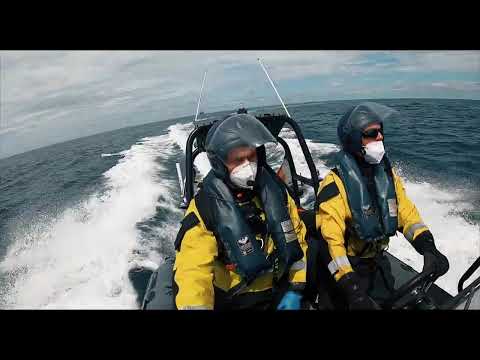
“Patrolling the Horizon” - Ep 2: Fisheries Boarding
Óglaigh na hÉireann / Irish Defence Forces
Required Education
A relevant Honours Bachelor degree (NFQ Level 8) is the typical minimum entry requirement; useful Leaving Certificate subjects include Biology, Agricultural Science, Geography, Chemistry, and Mathematics. Degree programmes in Environmental Science, Marine Science, Zoology, or Aquatic Biology at universities such as University of Galway, UCC, or UCD provide strong preparation. Technological universities such as ATU and MTU also offer relevant programmes in Environmental Management and Marine Science. Some officers enter through postgraduate study (NFQ Level 9) in Fisheries Management or Aquatic Ecology after completing a related undergraduate degree. There is no single statutory registration body for Fisheries Officers, but roles with Inland Fisheries Ireland or the SFPA require candidates to meet specific competency and vetting standards set by those agencies.
Required Skills
Career Perspective
Most Fisheries Officers begin their careers in junior field roles with Inland Fisheries Ireland or the Sea-Fisheries Protection Authority, gaining experience in patrol work, licensing, and stock assessments. With several years of experience, you can progress to senior officer positions with responsibility for a specific river catchment or coastal district. Further advancement into regional management, policy advisory, or scientific roles is possible, particularly for those who undertake postgraduate study in fisheries or environmental management. Some experienced officers move into consultancy, European Union fisheries programmes, or roles with environmental non-governmental organisations.
AI Impact on the job
AI-powered remote sensing and satellite imagery are beginning to assist Fisheries Officers in monitoring large stretches of coastline and river systems more efficiently than traditional patrols alone allow. Automated water quality sensors and machine-learning tools can flag pollution events or unusual fish movement patterns in real time, allowing officers to respond more quickly. However, the enforcement, community engagement, and hands-on ecological assessment aspects of the role require human judgement and presence that AI cannot replicate. Overall, AI is likely to enhance the effectiveness of Fisheries Officers rather than reduce the need for them.
Career Ladder
→ Fisheries Officer (Current role)
Related Studies
Marine Science
4 year • Environment, Agriculture & Animals
BachelorZoology
4 year • Environment, Agriculture & Animals
BachelorAgricultural Science
4 year • Environment, Agriculture & Animals
BachelorEnvironmental Science
4 year • Environment, Agriculture & Animals
BachelorApplied Ecology and Conservation
4 year • Environment, Agriculture & Animals
Employers in Ireland
Organisations in Ireland that employ people in this occupation.
Nationwide (HQ: Citywest, Dublin)
Core employer; patrol, license, conserve and manage inland waterways
Nationwide (HQ: Clonakilty, Co. Cork)
Enforce sea-fisheries law and inspect landings at Irish ports
Dublin and Nationwide
Policy, licensing and oversight of marine fisheries management
Wexford (HQ) and Nationwide
Monitor water quality and investigate aquatic pollution incidents
Oranmore, Co. Galway
Conduct fisheries surveys and stock assessments in Irish waters
Nationwide
Protect aquatic habitats and protected species in designated areas
Dún Laoghaire, Co. Dublin and Nationwide
Support sustainable seafood sector and advise on fisheries practices
Derry / Donegal border region
Manage and protect fisheries on Lough Foyle and Carlingford Lough
Cork City and County
Local authority environmental team monitoring coastal and river fisheries
Enniskillen (HQ) and Nationwide
Manage navigable waterways and support fisheries access and conservation
We don't know whether these employers currently have vacancies — always check their own website. And if there's somewhere you'd really love to work, it can be worth applying anyway, even without an open vacancy.
Our tools can help you with that:
This website uses cookies
We use functional cookies and — with your consent — cookies for preferences, statistics and marketing.