Install Findmino as an app for the best experience!
Flight Operations Officer
(Aviation Dispatch Officer, Air Operations Officer, Flight Dispatcher, Flight Operations Supervisor)
Transport & Logistics
Salary
€32,000 - €75,000/yr
Level
Professional
Outlook
Growing
Sector
Transport & Logistics
What does a Flight Operations Officer do?
As a Flight Operations Officer you are responsible for planning, coordinating, and authorising the safe dispatch of aircraft on scheduled and charter services. You compile detailed flight plans that account for weather conditions, air traffic restrictions, fuel requirements, load sheets, and maximum take-off weights, ensuring every departure meets regulatory standards. Working closely with pilots, air traffic control, ground handling crews, and meteorological services, you monitor flights in real time and make time-critical decisions when disruptions, diversions, or technical issues arise. In an Irish context, roles are primarily based at Dublin Airport or in the operations centres of carriers such as Ryanair and Aer Lingus, and you typically work rotating shifts to maintain around-the-clock coverage.
A Day in the Life
Listen: a day as a Flight Operations Officer
Your alarm goes off at 04:15. You are on the early shift at the airline's operations centre on the campus of Dublin Airport, and you need to be at your desk by 05:30. You grab a coffee from the canteen, log into the flight planning system, and pull up the status board showing every departure scheduled before noon. A transatlantic service to New York boards in three hours, and you are the officer responsible for releasing it. By 06:00 you are working through the fuel calculation for the New York flight. You draw the latest SIGMET charts from the Met Éireann aviation desk and check NOTAMs — Notices to Air Missions — issued by the Irish Aviation Authority overnight. There is a temporary restriction over Scottish airspace due to a military exercise, so you reroute the flight plan northward, recalculate the fuel burn, and send the revised plan to the crew via the ACARS datalink on the aircraft.
Videos about Flight Operations Officer
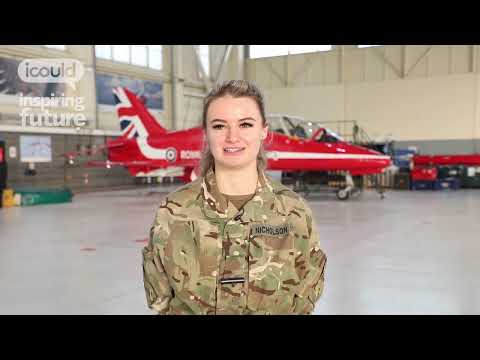
Career advice on becoming a flight operations officer
icould career stories
Some videos were filmed in the UK. The work itself is the same, but the exams, qualifications and pay they mention are British — we include them so you get a feel for the job.
Required Education
A Level 7 or Level 8 degree is the typical entry route, with relevant disciplines including aviation management, air transport management, or aerospace engineering at institutions such as TU Dublin, University of Limerick, or Dublin City University. Leaving Certificate subjects such as Mathematics, Physics, Geography, and a modern language are highly advantageous when applying for these programmes through the CAO. Some entrants hold a commercial pilot's licence (CPL) or air traffic control background, which provides strong operational credibility. Specialist diplomas and short-course qualifications in flight dispatch and EASA regulations are offered by aviation training organisations and can complement a general degree. All operational activities must comply with European Union Aviation Safety Agency (EASA) regulations and the Irish Aviation Authority (IAA) oversight framework, and employers typically require completion of an approved flight dispatcher training programme before you can act as a licensed dispatcher.
Required Skills
Career Perspective
Most people enter as a junior flight operations officer or dispatch assistant following a relevant degree and an approved dispatcher training programme, initially working under supervision on domestic or short-haul operations. With experience, you progress to full flight operations officer responsibility, handling long-haul international routes and complex disruption management. Senior roles such as Flight Operations Supervisor or Operations Control Manager involve leading a team of officers, liaising with regulatory bodies, and setting operational procedures. At the most senior level, a Director of Flight Operations oversees an airline's entire operational planning function, often working alongside safety and compliance departments.
AI Impact on the job
AI-powered flight planning tools are increasingly capable of generating optimised route options, fuel uplift calculations, and weather-aware flight plans with minimal human input, reducing routine computational workload for flight operations officers. However, the requirement for human authorisation of dispatch decisions, accountability under EASA regulations, and the management of unforeseen disruptions mean that experienced officers remain essential. AI is more likely to function as a decision-support tool, surfacing risks and alternatives faster, than to replace the officer's judgement and legal responsibility. Officers who become proficient in interpreting and validating AI-generated outputs will be better positioned in the evolving operational environment.
Career Ladder
→ Flight Operations Officer (Current role)
Related Studies
Employers in Ireland
Organisations in Ireland that employ people in this occupation.
Dublin Airport, Co. Dublin
Plan and dispatch transatlantic and European scheduled passenger flights daily.
Dublin Airport, Co. Dublin
Coordinate high-frequency short-haul flight operations across Europe's largest low-cost network.
Swords, Co. Dublin
Dispatch cargo and charter flights, managing fuel and load plans across global routes.
Dublin Airport, Co. Dublin
Authorise regional and wet-lease operations, coordinating flight plans for Scandinavian and European routes.
Dublin City Centre & Dublin Airport
Oversee regulatory compliance and safety standards for Irish flight operations nationally.
Dublin Airport, Co. Dublin
Support airside coordination and ground operations for departing and arriving aircraft.
Shannon, Co. Clare
Coordinate technical and operational dispatch for aircraft maintenance and ferry flights.
Galway Airport, Co. Galway
Plan and authorise charter and air ambulance flight operations from western Ireland.
Casement Aerodrome, Baldonnel, Co. Dublin
Coordinate military and State flight operations, ensuring mission-ready dispatch and compliance.
Dublin Airport, Co. Dublin
Manage private and business jet flight planning, permits, and real-time operations monitoring.
We don't know whether these employers currently have vacancies — always check their own website. And if there's somewhere you'd really love to work, it can be worth applying anyway, even without an open vacancy.
Our tools can help you with that:
This website uses cookies
We use functional cookies and — with your consent — cookies for preferences, statistics and marketing.