Install Findmino as an app for the best experience!
Plumber
(Domestic Plumber, Commercial Plumber, Gas Fitter, Pipe Fitter)
Construction & Trades
Salary
€30,000 - €65,000/yr
Level
Operational
Outlook
Growing
Sector
Construction & Trades
What does a Plumber do?
As a plumber you install, maintain and repair water, heating, gas and sewage systems in homes, commercial buildings and industrial sites. Your daily work involves cutting, bending and joining pipes, fitting boilers, radiators, showers and sanitary ware, and testing systems to make sure they operate safely and to the required standard. You read technical drawings and specifications to plan pipework layouts, and you use a range of hand and power tools as well as specialist equipment such as pipe-bending machines and pressure gauges. You work alongside other trades — electricians, heating engineers and construction workers — as well as directly with homeowners, landlords and building contractors.
A Day in the Life
Listen: a day as a Plumber
Your alarm goes off at 6.45 a.m. You load your van — pipe cutter, compression fittings, PTFE tape, pressure gauge, pipe-bending machine and a bag of assorted valves — and check your job sheet for the day. First stop is a semi-detached house in a housing estate where a homeowner has reported no hot water. You arrive at 7.30 a.m., introduce yourself, and put on your boot covers before stepping inside. You diagnose the fault quickly: the diverter valve on the gas combi boiler has seized. You isolate the gas and water supplies, photograph the boiler's serial plate for your records, and get to work. Replacing the valve takes about ninety minutes. You relight the boiler, run through a series of pressure checks and confirm the hot water is flowing correctly before writing up your service report on a paper docket that the homeowner signs.
Videos about Plumber
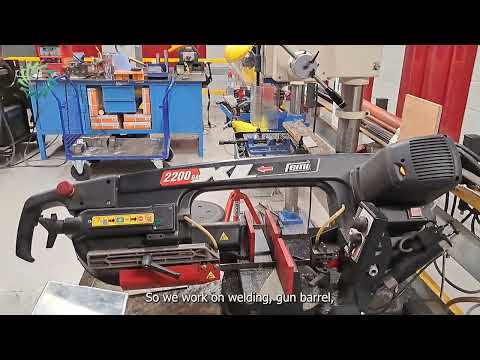
Plumbing Apprenticeship at Tipperary ETB Archerstown, Thurles
Tipperary ETB
Required Education
Entry to the Plumbing apprenticeship is typically available to those who have completed the Leaving Certificate, though a Junior Cycle qualification with relevant work experience may be considered by some employers. Subjects such as Construction Studies, Engineering, Mathematics and Physics are particularly useful preparation. The SOLAS-registered plumbing apprenticeship runs for approximately four years, combining on-the-job training with an employer and off-the-job phases at a designated training centre or Institute of Technology, leading to an NFQ Level 6 Advanced Certificate in Plumbing. Alternatively, a QQI Level 5 or 6 PLC course in Plumbing or Construction Crafts at a College of Further Education can provide a route into the apprenticeship or related employment. Plumbers who wish to work on gas installations must register with the Register of Gas Installers of Ireland (RGII), which requires additional assessed competency in gas work. Some experienced plumbers progress to management or estimating roles and may pursue NFQ Level 7 or Level 8 programmes in Building Services or Construction Management through the technological universities.
Required Skills
Career Perspective
Most plumbers begin their career as apprentices, working under the supervision of a qualified plumber while completing the four-year SOLAS apprenticeship. On qualifying at NFQ Level 6, you can work as a fully qualified plumber in the domestic, commercial or industrial sector, and many gain RGII gas registration to broaden their scope of work. With several years of experience, you may move into roles such as site supervisor, contracts manager or self-employment, running your own plumbing and heating business. Further study in Building Services Engineering or Construction Management can open the door to senior technical or managerial positions within larger contractors or building services companies.
AI Impact on the job
AI-powered diagnostic tools and building management systems are beginning to assist plumbers in identifying faults and monitoring system performance remotely, improving efficiency on complex commercial projects. Computer-aided design software with AI features can help with pipework routing and clash detection during the planning phase, reducing costly on-site errors. However, the hands-on, problem-solving nature of plumbing work — fitting systems in confined spaces, responding to unexpected site conditions, and working directly with clients — means that the core craft skills of a plumber cannot be automated in the foreseeable future. Overall, AI is likely to support rather than replace plumbing work, making those who embrace new technology more productive and competitive.
Career Ladder
→ Plumber (Current role)
Related Studies
Employers in Ireland
Organisations in Ireland that employ people in this occupation.
Dublin, with projects nationwide
Installs complex plumbing and mechanical systems on major construction projects
Dublin, with sites nationwide
Plumbers work on large-scale commercial and infrastructure construction projects
Clonmel, Co. Tipperary, with sites nationwide
Delivers mechanical and plumbing installations on industrial and commercial sites
Nationwide
Maintains and repairs national water and sewage pipeline infrastructure
Dublin
Plumbers maintain social housing water, heating and sanitary systems
Dublin and nationwide
Gas and heating engineers install and service boilers and pipework
Dublin, with sites nationwide
Provides mechanical plumbing services on pharmaceutical and commercial projects
Nationwide
Maintains plumbing and heating systems across hospitals and healthcare facilities
Dublin
Installs and services domestic boilers, heating and plumbing systems
Dublin, Cork, Galway
Plumbers support mechanical engineering on large residential and commercial builds
We don't know whether these employers currently have vacancies — always check their own website. And if there's somewhere you'd really love to work, it can be worth applying anyway, even without an open vacancy.
Our tools can help you with that:
Read more about this work

This website uses cookies
We use functional cookies and — with your consent — cookies for preferences, statistics and marketing.