Install Findmino as an app for the best experience!
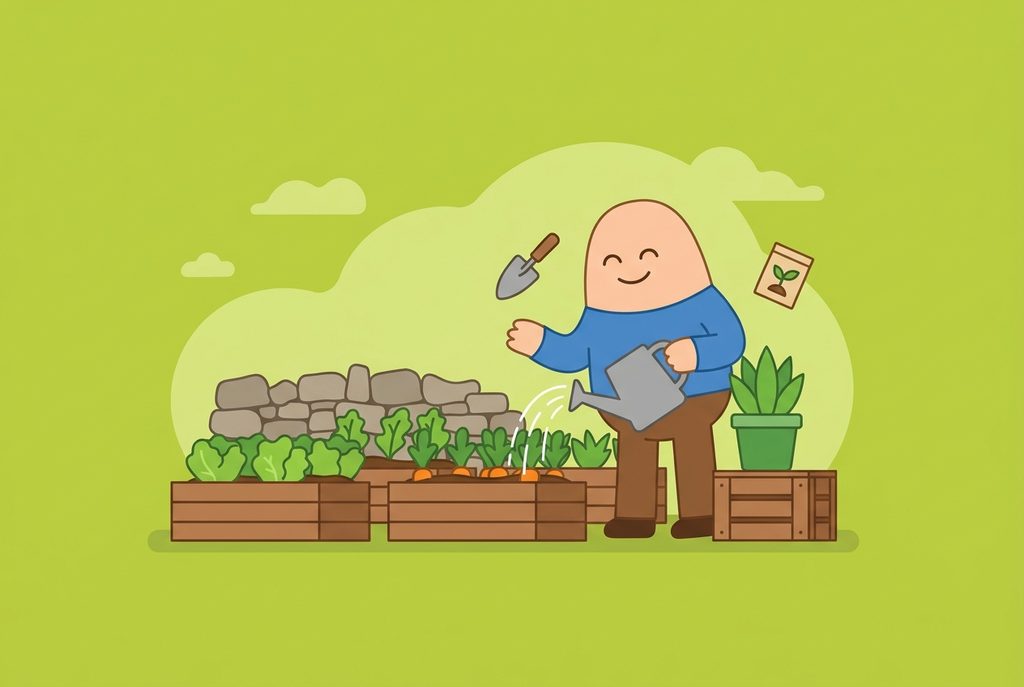
Growing Your Own (And Why a Windowsill Changes Everything)
Getting your hands into Irish soil — even a pot of it — rewires how you see food, time, and the place you live.
The rain hasn't stopped since Tuesday and you're standing at the kitchen window holding a mug gone cold, watching a blackbird work over the lawn. There's a bag of compost in the shed you bought six weeks ago and haven't opened. Then you open it, on a whim, on a Thursday, and something shifts — and by September you'll be pressing courgettes on neighbours who've started avoiding your calls. That is the quiet trap of growing your own, and it is worth every bit of it.
Why it works
Gardening sits in a strange category of human activity where effort is delayed, failure is educational, and the reward arrives when you've almost forgotten what you planted. Psychologists call it a restorative environment — your attention refocuses, your cortisol drops, and the compulsion to check your phone loses out to the compulsion to check if the broad beans have moved. The surprising fact is that Irish soil, even in cities, holds a living ecosystem of fungi and bacteria that actually communicates with plant roots in ways researchers are still mapping — meaning your neglected patch is already doing more than you think.
Starting small
You don't need an allotment or a polytunnel or a single YouTube tutorial. Start with a pot of herbs on the windowsill — a supermarket basil plant divided into three pots is cheap and forgiving and teaches you about watering faster than anything else. From there, a grow bag of salad leaves on a doorstep asks almost nothing of you and produces a shocking amount. If you have a patch of ground, even a metre square of dug-up lawn can take a few seed potatoes in spring and come back at you with enough Kerr's Pinks to justify an unreasonable level of pride. Seed swaps happen in community centres and church halls all over the country — ask around your local Tidy Towns group and you'll find one.
The 30-day doorstep challenge: Buy one packet of radish seeds, sow them in a pot outside your front door, water them lightly each morning, and eat whatever comes up before the month is out.
When it bites
Once you're hooked, you discover that growers are almost militantly generous with knowledge and produce alike. The Irish Seed Savers Association, based in Clare, is a genuine national treasure — they preserve heritage varieties that would otherwise vanish and connect growers across the country. GIY Ireland, founded in Waterford, built a movement around the idea that growing food is a social act as much as a domestic one, and their network reaches into towns you wouldn't expect. Allotment associations affiliated with local councils manage plots in most counties — waiting lists exist, but they move, and getting on one puts you in a community of people who will tell you exactly what blight did to their tomatoes and exactly how to stop it happening to yours.
So — is there a corner of your garden, a balcony, a windowsill, that's doing nothing in particular right now? Give it one season of your attention and see what it gives back.
Activities in Home & Garden
Explore the Irish National Stud Gardens from Your Home
MonaghanWalking and Picnicking at Rossmore Forest Park, Monaghan
CavanExplore County Cavan Heritage Online with Cavan County Museum
KilkennyExplore Kilfane Glen & Waterfall: A Hidden Garden Gem in Kilkenny
KilkennyExploring the Gardens and Parklands of Kilkenny Castle
LouthVirtual Irish Garden Design Workshops from County Louth
More reading in this category
This website uses cookies
We use functional cookies and — with your consent — cookies for preferences, statistics and marketing.