Install Findmino as an app for the best experience!
Clinical Measurement Science
Health & Social Care
Duration
4 years
Level
Bachelor
Outlook
Growing
What will you learn?
Clinical Measurement Science is a health science degree that trains you to use specialised diagnostic equipment to measure and assess how the body's systems are functioning. You study the science behind the heart, lungs, blood vessels and nervous system, and learn to perform tests such as ECGs, lung function assessments, vascular ultrasound and EEG recordings. The course is strongly practical, and you spend significant time on hospital placement working alongside clinical teams in cardiology, respiratory, neurophysiology and vascular laboratories. A typical week combines lectures and anatomy classes with hands-on laboratory sessions where you practise diagnostic techniques on fellow students before working with real patients. You develop skills in data interpretation, patient communication and clinical report writing across your four years.
Videos about Clinical Measurement Science
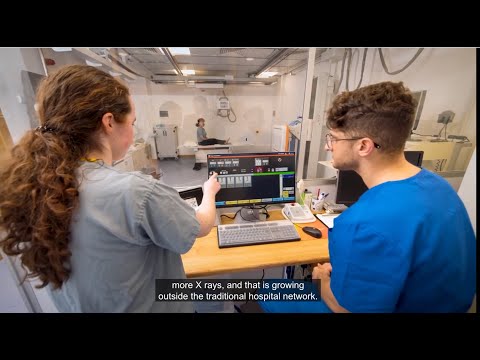
UCD Radiography
Required Education
Entry is through the CAO, and applicants typically need at least six subjects in the Leaving Certificate including English and a science subject such as Biology, Chemistry or Physics. Higher Level Maths and a laboratory science subject are strongly recommended and may be specified by individual institutions. CAO points for this programme are generally moderate to high, reflecting strong demand and limited places. If you do not meet entry requirements directly, a relevant QQI Level 5 or Level 6 PLC award in Health Science or Science can provide a progression route into the first or second year of the degree. Mature applicants aged 23 or over may apply directly through the mature entry route, and HEAR and DARE schemes support applicants from socioeconomic or disability backgrounds.
Core Subjects
Career Prospects
Demand for Clinical Measurement Physiologists in Ireland is steady and growing, driven by an ageing population and increased prevalence of cardiovascular and respiratory conditions. The HSE and private hospital networks actively recruit graduates, and the relatively small number of places on Irish programmes means competition among employers for qualified staff remains favourable to graduates. Many physiologists progress into senior clinical roles, management positions or specialist research over the course of their careers. Irish-trained graduates are also recognised internationally, opening opportunities in the UK, Australia and beyond.
Impact of AI on this program
Artificial intelligence is beginning to assist in the interpretation of complex diagnostic data such as ECG analysis, sleep studies and imaging, and you will encounter AI-assisted reporting tools during your training. However, the hands-on nature of patient contact, equipment operation and clinical judgement means that human physiologists remain central to the role and cannot be replaced by automation alone. Understanding how AI tools work and being able to critically evaluate their outputs is becoming an important competency in the profession. Overall, AI is likely to enhance efficiency and diagnostic accuracy in the field rather than reduce the need for qualified Clinical Measurement Physiologists.
CAO courses & points
2 CAO courses lead to this qualification. Points shown are last year's Round 1 score.
Where can you study this?Providers and indicative points are curated with AI support. Always double-check with the institution itself.
Providers and indicative points are curated with AI support. Always double-check with the institution itself.
CAO points (indicative): 390-480 (2024)
* Indicative only: CAO points change every year. Always check the current points on cao.ie and with the institution.
How to apply
Clinical Measurement Science at undergraduate level in Ireland is applied for through the CAO (Central Applications Office) at cao.ie, with offers made in August based on Leaving Certificate results and subject requirements (typically including Biology and Chemistry or Physics). This is a highly specialised programme offered by a very limited number of institutions in Ireland, so applicants should check individual CAO course codes and specific subject entry requirements directly with TU Dublin and DCU, as these can change annually.
Possible Job Matches
Right after this study
Jobs you qualify for immediatelyGrowth opportunities
Roles you can grow into with experience or further studySimilar Studies
Addiction Studies
This degree prepares you to work directly with individuals and communities affected by substance misuse, behavioural addictions, and related mental...
4 years
BachelorAdvanced Therapeutic Technologies
This degree focuses on the science and clinical application of advanced therapeutic technologies, including cell therapy, gene therapy, and...
4 years
BachelorApplied Social Care
Applied Social Care at honours degree level prepares you to work directly with vulnerable individuals and communities across a wide range of...
4 years
This website uses cookies
We use functional cookies and — with your consent — cookies for preferences, statistics and marketing.