Install Findmino as an app for the best experience!
Professional Driving — Bus and Coach (Category D)
Tech & Engineering
Duration
1 years
Level
FET
Outlook
Growing
What will you learn?
This programme prepares you to drive buses and coaches professionally, combining classroom theory with substantial on-road training. You study road safety legislation, vehicle safety checks, passenger care, and the specific handling characteristics of large passenger vehicles. Practical sessions cover manoeuvring, reversing, hill starts, and driving in urban and rural Irish conditions. You work towards obtaining your Category D driving licence and completing the Driver Certificate of Professional Competence (Driver CPC), which is a legal requirement for paid passenger carrying in Ireland. A typical week balances theory classes in transport regulation and first aid with behind-the-wheel hours supervised by qualified instructors. Some ETB programmes include placements with operators such as Dublin Bus, Bus Éireann, or private coach companies.
Videos about Professional Driving — Bus and Coach (Category D)
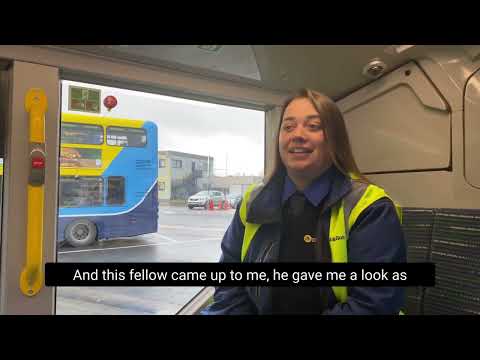
Have you ever wondered what it is like to be a bus driver?
Required Education
There are no formal Leaving Certificate requirements for this course, making it accessible to a wide range of applicants. You must hold a valid Category B (car) driving licence and typically be at least 18 years of age, though 21 is required to drive Category D vehicles commercially without restriction. A satisfactory medical examination (D4 standard) issued by a qualified GP is mandatory, as is a clean or acceptable driver's licence record. ETBs may ask for a basic literacy and numeracy assessment to support classroom learning. The course is particularly suitable for mature applicants changing career or those entering the workforce after a period of unemployment, and Springboard+ may fund certain related upskilling programmes.
Core Subjects
Career Prospects
Demand for qualified Category D drivers in Ireland is strong and consistently growing, driven by investment in public transport, the National Development Plan, and ongoing driver shortages reported by major operators. Dublin Bus, Bus Éireann, and Go-Ahead Ireland regularly recruit newly qualified drivers, and private coach operators hire year-round for tourism and contract work. Starting gross salaries typically range from around €32,000 to €40,000 per annum, with experienced drivers and those on public-sector pay scales earning above €45,000. Job security in this sector is generally very good, particularly within public transport organisations covered by collective agreements.
Impact of AI on this program
AI is beginning to influence fleet management, route optimisation, and driver monitoring systems that professional drivers interact with daily, so digital familiarity is increasingly useful. Autonomous bus technology is being trialled in limited settings globally, but full automation of urban passenger services in Ireland remains many years away, meaning skilled human drivers will be in demand for the foreseeable future. Drivers are more likely to work alongside AI-assisted safety systems — such as lane-departure warnings and automatic emergency braking — than to be replaced by them. Overall, AI poses a low displacement risk to this occupation in the short to medium term.
Where can you study this?Providers and indicative points are curated with AI support. Always double-check with the institution itself.
Providers and indicative points are curated with AI support. Always double-check with the institution itself.
How to apply
There is no CAO application for this course; learners apply directly to their local ETB or an RSA-approved Driver CPC training centre. Candidates must hold or be working towards a Category D driving licence issued by the Road Safety Authority (RSA), and training combines mandatory Driver CPC Initial Qualification modules (280 hours theory and practical) with licence acquisition through an approved driving instructor.
Possible Job Matches
Right after this study
Jobs you qualify for immediatelyDiscover more on Findmino
Other studies, careers, ideas and blogs you might not know yet.
This website uses cookies
We use functional cookies and — with your consent — cookies for preferences, statistics and marketing.