Install Findmino as an app for the best experience!
Science Education (Concurrent Teaching)
Education & Training
Duration
4 years
Level
Bachelor
Outlook
Growing
What will you learn?
This four-year concurrent degree combines deep study of science subjects — typically two from Physics, Chemistry, and Biology — with Mathematics, alongside professional teacher education modules. You develop subject knowledge and pedagogy simultaneously, spending significant time in second-level schools on supervised teaching practice placements each year. A typical week mixes laboratory sessions, lectures in your science specialisms, and education seminars covering curriculum design, assessment, and inclusive teaching. You graduate fully qualified to teach two science subjects and Mathematics at Junior and Senior Cycle level, including Leaving Certificate Higher Level. Some programmes include an Erasmus or international placement opportunity in third year.
Videos about Science Education (Concurrent Teaching)
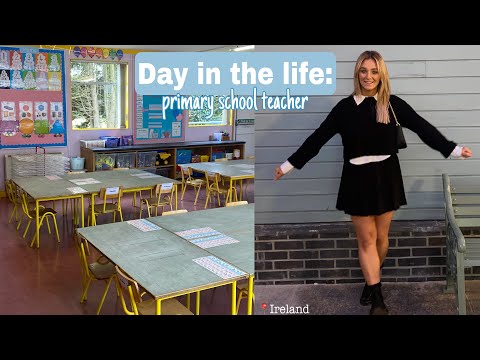
day in the life of a teacher in Ireland // primary school teacher in Dublin
Required Education
Entry is through the CAO, and points are typically high given the programme's popularity and dual qualification outcome. You generally need six Leaving Certificate subjects including a minimum grade in English and Irish, with Higher Level Mathematics and at least one laboratory science subject — Biology, Chemistry, or Physics — strongly expected. QQI Level 5 or 6 FET awards in Science or related areas may offer a progression route for mature applicants or those without traditional Leaving Certificate results. Mature students (aged 23 or over on 1 January of entry year) may apply through the mature student CAO pathway and are assessed separately. HEAR and DARE access schemes are available for applicants from socioeconomically disadvantaged backgrounds or with disabilities. Garda vetting is required before school placement.
Core Subjects
Career Prospects
Demand for qualified science and mathematics teachers in Ireland is consistently strong, with Physics and Chemistry teachers in particular shortage in many regions. Registration with the Teaching Council is required to teach in a recognised school, and graduates of accredited concurrent programmes are eligible to apply directly upon graduation. Job security is generally good, with permanent positions available through the ETB and voluntary secondary school sectors after an initial probationary period. The combination of two science subjects plus Mathematics makes graduates especially attractive to school principals facing subject shortages.
Impact of AI on this program
AI tools are beginning to influence lesson planning, resource creation, and formative assessment in second-level science classrooms, and teacher education programmes are beginning to address AI literacy as part of digital competence frameworks. Adaptive learning platforms may increasingly support differentiated instruction, particularly in mixed-ability science classes. However, the core of science teaching — conducting experiments, mentoring students, and facilitating inquiry-based learning — relies on human interaction that AI cannot replicate. Science teachers who understand AI tools will be well placed to prepare students for an increasingly technology-driven society.
CAO courses & points
4 CAO courses lead to this qualification. Points shown are last year's Round 1 score.
Science with Teacher Ed (Biology with Physics/Chemistry/Ag Science)
University of Limerick
LM092 · NFQ 8
Science Education
University College Cork (NUI)
CK413 · NFQ 8
Science Education
Dublin City University
DC203 · NFQ 8
Science with Teacher Ed (Physical Sciences with Chemistry and Physics)
University of Limerick
LM096 · NFQ 8
Where can you study this?Providers and indicative points are curated with AI support. Always double-check with the institution itself.
Providers and indicative points are curated with AI support. Always double-check with the institution itself.
CAO points (indicative): 400-580 (2024)
* Indicative only: CAO points change every year. Always check the current points on cao.ie and with the institution.
How to apply
Applications for concurrent BSc (Ed) Science Education programmes are made through the CAO (cao.ie) for undergraduate entry; applicants typically require strong Leaving Certificate results in science subjects such as Biology, Chemistry, Physics or Mathematics, and some programmes require an interview or subject competency assessment as part of the selection process.
Possible Job Matches
Right after this study
Jobs you qualify for immediatelyDiscover more on Findmino
Other studies, careers, ideas and blogs you might not know yet.
This website uses cookies
We use functional cookies and — with your consent — cookies for preferences, statistics and marketing.