Install Findmino as an app for the best experience!
Music Education
Education & Training
Duration
4 years
Level
Bachelor
Outlook
Stable
What will you learn?
A B.Mus.Ed combines rigorous musical training with professional teacher education, preparing you to teach Music at primary or post-primary level in Ireland. You develop advanced performance skills on your principal instrument or voice alongside music theory, harmony, counterpoint, and aural training. Modules in pedagogy, curriculum studies, and educational psychology teach you how children and young people learn music. A typical week blends ensemble rehearsals, individual practice, lecture-based theory classes, and school placement days. Supervised teaching practice in post-primary schools is central to the degree, and some programmes offer opportunities for international exchange or Erasmus study. By graduation you hold both a strong musical portfolio and a recognised teaching qualification.
Videos about Music Education
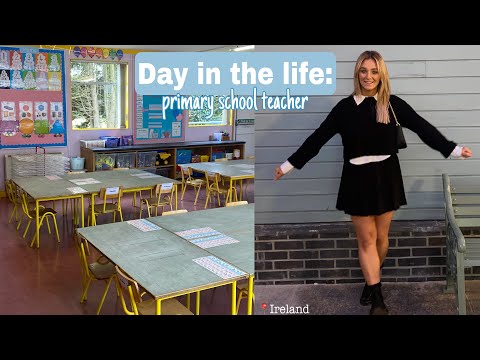
day in the life of a teacher in Ireland // primary school teacher in Dublin
Required Education
Entry is through the CAO and is competitive, with points requirements typically described as high given the limited number of places available. You will normally need to meet Leaving Certificate minimum entry requirements set by the institution, which usually include a pass in Irish, English, and Mathematics, with several subjects at Higher level. Higher-level Music is strongly advised and may be specified or weighted; Higher-level English is also beneficial. Many programmes require or strongly recommend a performance audition as part of the selection process, assessed separately from CAO points. Mature applicants aged 23 or over may apply through the mature-student CAO route and are generally assessed by interview and audition. HEAR and DARE access schemes are available at both TCD and DCU for eligible applicants.
Core Subjects
Career Prospects
Demand for qualified Music teachers in Ireland is steady, particularly in schools that offer Music to Leaving Certificate level, though the number of post-primary schools offering the subject limits overall vacancies. Graduates who hold Teaching Council registration have a significant advantage in securing permanent or CID (Contract of Indefinite Duration) posts over time. The broader music education sector, including ETB schemes and community music, continues to expand in line with government investment in arts-in-education initiatives. Portfolio careers blending teaching with performance or creative work are common and increasingly viable.
Impact of AI on this program
AI-powered tools such as adaptive ear-training apps and notation software are already embedded in music education practice, and graduates are expected to evaluate and integrate these technologies critically in the classroom. Automated accompaniment and composition tools can support differentiated learning, helping students at varied ability levels engage with musical concepts independently. However, the core of music teaching — live performance, ensemble coaching, and the human relationship between teacher and student — is highly resistant to automation. Graduates who understand both the musical and pedagogical dimensions of these tools will be well placed to use them effectively.
Where can you study this?Providers and indicative points are curated with AI support. Always double-check with the institution itself.
Providers and indicative points are curated with AI support. Always double-check with the institution itself.
CAO points (indicative): 300-490 (2024)
* Indicative only: CAO points change every year. Always check the current points on cao.ie and with the institution.
How to apply
The primary route for Bachelor of Music Education programmes in Ireland is through the CAO (Central Applications Office) at cao.ie, with most programmes also requiring an audition and/or interview as part of the selection process. Some institutions may additionally assess applicants through supplementary portfolio or practical examinations, so candidates should check individual college requirements carefully.
Possible Job Matches
Right after this study
Jobs you qualify for immediatelySimilar Studies
Acting
A BA (Hons) in Acting gives you intensive, conservatoire-style training in performance for stage and screen. You study voice, movement, character...
4 years
BachelorArt and Design Education
This four-year concurrent degree at NCAD combines studio-based art and design practice with professional teacher education, preparing you to teach...
4 years
Discover more on Findmino
Other studies, careers, ideas and blogs you might not know yet.
This website uses cookies
We use functional cookies and — with your consent — cookies for preferences, statistics and marketing.